
Jackson County Arrest Records and Court Charges
Arrest records in Jackson County usually begin with the agency that made the arrest or received the person into custody. The Jackson County Sheriff's Office lists its administration, detention, dispatch, investigations, and patrol contacts, and the county detention page describes the jail population as including pretrial detainees, sentenced persons, people held on court-order contempt, and temporary North Carolina Department of Corrections housing. Those facts belong to the arrest and custody side of the record.
Court charge records are different. Once a criminal case opens, the charge record is tracked through the Clerk of Superior Court and the North Carolina eCourts Portal. The Jackson County court contact directory places the District Attorney in Prosecutorial District 43 and lists the Clerk, magistrates, judges, probation, juvenile services, and other court offices. For the full case file and final outcome, use Jackson County criminal court records; for current custody questions, the booking side belongs with the jail and inmate process.
The Sheriff's Patrol Division page says deputies respond to citizen calls, file official reports, serve warrants, serve domestic violence papers, respond to 911 calls, and assist other law-enforcement and emergency services. That patrol work can explain the arresting-agency line in a case, but it does not replace the court file. Charges after arrest are read through the court case, the clerk record, and, when needed, the DA's prosecution status.
The Sheriff's Patrol page is the source for patrol duties and warrant service in Jackson County.
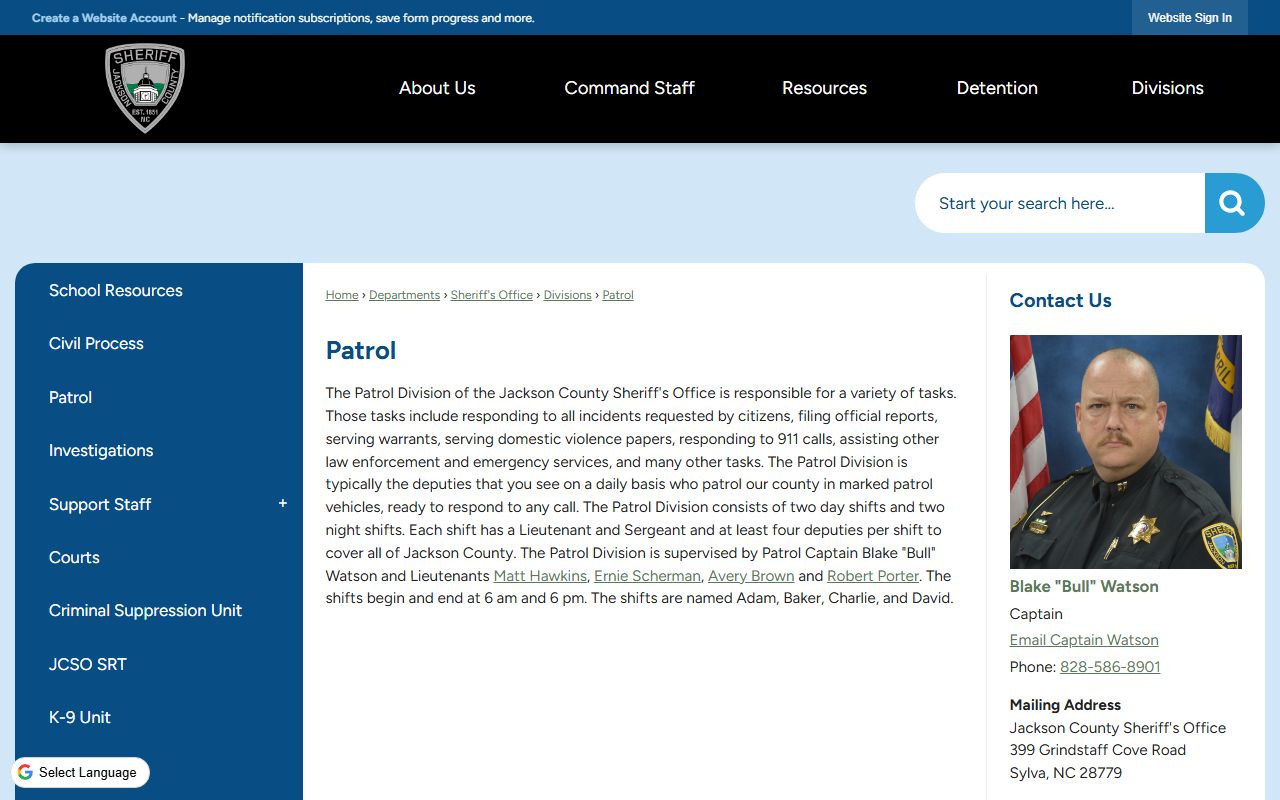
That local patrol context helps explain why an arrest record may start with a deputy report while the related court charge record is maintained in the court system.
Search Jackson County Charges After Arrest
Jackson County does not have a separate county-only criminal charge database in the research. The practical route is the North Carolina eCourts Portal, filtered to Jackson County, plus Clerk of Superior Court help for copies, older records, and background-check-oriented searches. The portal supports record-number and name searching, advanced location filters, case status filters, file-date filters, and citation number searching in related payment and case workflows.
- Open the eCourts Portal and choose Smart Search for public case records.
- Search by case number or by a defendant name in Last, First Middle Suffix format.
- Use Advanced Filtering Options to choose Jackson County as the location when the statewide result set is too broad.
- Open the matching case and read each listed charge, case status, file date, hearing date, and disposition field that is available to the public.
- Call the Clerk of Superior Court at (828) 631-6400 when a certified copy, older file, or clerk search is needed.
The Portal warns that JavaScript, cookies, and supported browsers are required, and it uses CAPTCHA checks for anonymous and registered users. For jail custody facts, the official current-inmate search was not available during research because the old sheriff roster link redirected to the Sheriff homepage. That makes the Detention line, (828) 586-2458, the official fallback for current custody questions.
Jackson County Charging Documents
Charges filed after an arrest may begin with a magistrate or court process and later move through District Court or Superior Court. In North Carolina, District Court handles misdemeanors, infractions, traffic matters, juvenile matters, and many first appearances. Superior Court handles felony criminal cases and other major matters. The charging document is the bridge between the arrest and the court case.
| Document | Who Uses It | How It Fits the Case |
|---|---|---|
| Magistrate information or complaint | Law enforcement, magistrate, or prosecutor workflow | Often starts a misdemeanor, infraction, warrant, or early criminal process. |
| Information | District Attorney | States the formal charge a prosecutor elects to pursue in court. |
| Indictment | Grand jury | Common in felony Superior Court matters when the grand jury returns charges. |
North Carolina court-record fields can include offense descriptions, statutes, case numbers, party names, hearing dates, bond, costs, payments, dispositions, and docket entries. One arrest can produce more than one charge. A charge can also change as the DA reviews evidence, negotiates pleas, or dismisses counts that are not pursued.
Arresting Agencies in Jackson County
Jackson County charges can start with the Sheriff, a municipal police department, or another law-enforcement agency. The Sylva Police Department lists Jackson County Dispatch at (828) 586-1911 and its department office at 755 W Main St, Sylva, NC 28779, with weekday office hours. Municipal police may have report or citation context, but the court charges still route through magistrates, the District Attorney, and the Clerk once a court case is filed.
Sylva Police is the local source for municipal police contact information tied to arrests and citations in town.

This distinction matters for a person trying to trace a charge from a town police encounter into the Superior Court or District Court record.
Jackson County Charge Status
A charge status is not the same thing as a final judgment. Early records may show that a charge is pending, set for hearing, amended, transferred, dismissed, or disposed by plea or trial. The eCourts Portal can show case information and some records or documents, but public visibility depends on case type, user role, redaction, and legal limits. If a status line is unclear, the Clerk or the criminal court division is the safer source.
| Status | What It Means | Where to Check |
|---|---|---|
| Pending | The charge has not reached a final outcome. | eCourts case record, Search Hearings, or Clerk. |
| Amended or reduced | The prosecutor or court record reflects a changed charge. | Case docket entries and charging documents. |
| Dismissed | The count was not pursued to conviction in that case. | Disposition field or final order. |
| Disposed | The charge has a current or final outcome such as plea, verdict, or dismissal. | Case summary, judgment, or clerk copy. |
Note: A charge may stay visible in public court records even when it did not end in a conviction, unless a sealing or expunction rule applies.
Jackson County Charges vs Convictions
Being charged means the state has accused a person of an offense. A conviction means guilt was established by plea or verdict. Jackson County court records can show charges that were later dismissed, reduced, amended, or resolved with a different offense. That is why arrest records and court charges after arrest should be read with the disposition and sentence fields, not just the offense name.
| Point of Comparison | Charge | Conviction |
|---|---|---|
| Stage | Accusation after arrest or court process | Final guilt finding by plea or verdict |
| What to read | Charging document, offense, statute, bond, next court date | Judgment, sentence, probation, fines, costs, and final disposition |
| Risk of misreading | May be dropped, changed, or dismissed | Still may be subject to appeal, correction, or later expunction |
Statewide Criminal Searches
State systems can help when the question is broader than a single Jackson County case. The NC Department of Adult Correction criminal offender searches page links to offender tools, and the NC DAC Offender Public Information search covers state offenders, probationers, parolees, and historical information back to 1972. It is not the Jackson County jail roster and it should not be treated as a list of current county arrests.
The NC DAC criminal offender search page is the state source for prison, probation, and parole search routes.
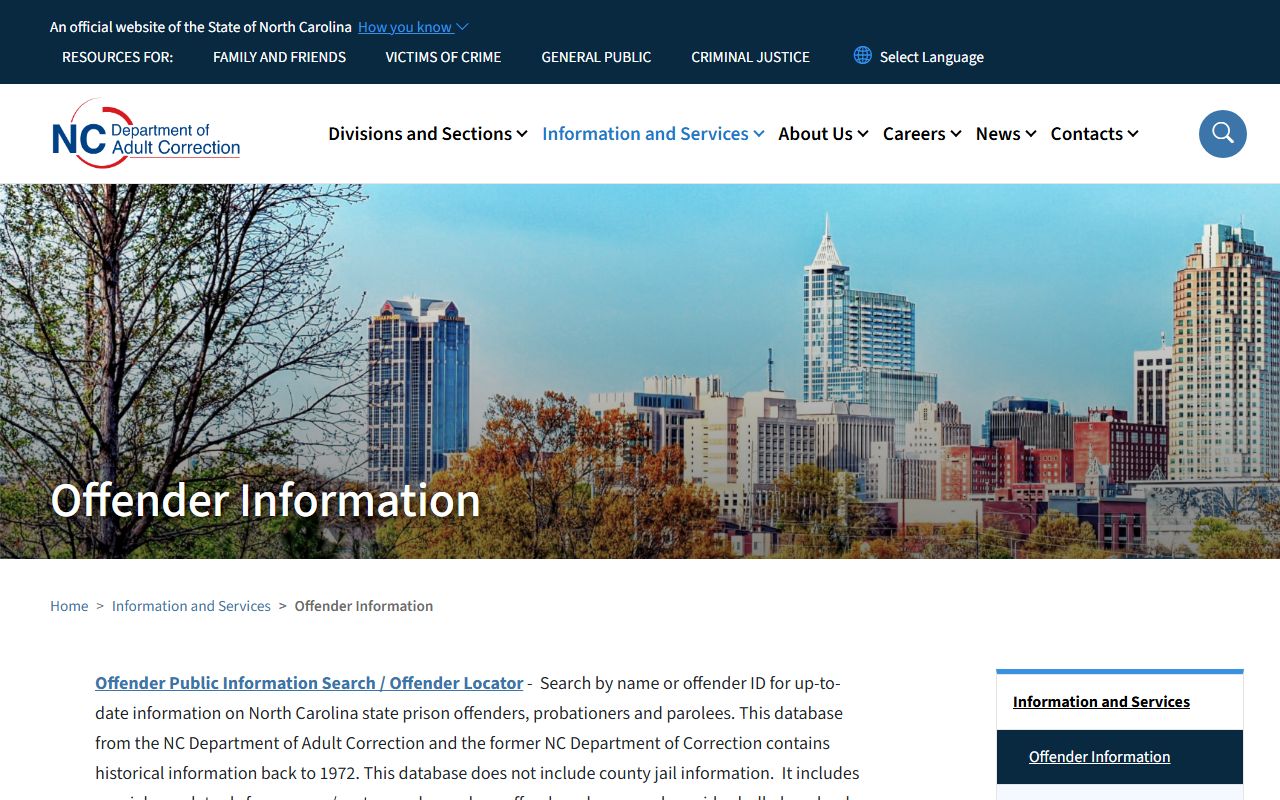
State offender tools are useful when a Jackson County charge has led to state custody or supervision, but local court and jail contacts still control current county charge and custody details.
Restricted Jackson County Charge Records
North Carolina law keeps several charge-related records out of ordinary public view. N.C. Gen. Stat. §7B-3000 governs juvenile court record confidentiality, and N.C. Gen. Stat. §15A-151 makes expunged court records confidential with limited exceptions. Criminal investigation records are also different from court records under N.C. Gen. Stat. §132-1.4.
| Record Type | Public Access Effect | Jackson County Route |
|---|---|---|
| Juvenile charge record | Confidential under Chapter 7B | Eligible parties, attorneys, agencies, or court order. |
| Expunged adult record | Closed from ordinary public inspection | Limited statutory access through courts and listed agencies. |
| Active investigation file | Not the same as a public court file | Sheriff, police, prosecutor, or court order limits may apply. |
Important: Public charge lookups are not consumer reports and should not be used for FCRA-regulated screening decisions.